Where are you able to simply be?
A place where there is no need to fit in, perform, or meet expectations. A place that brings familiarity, calm, connection, or a sense of belonging.
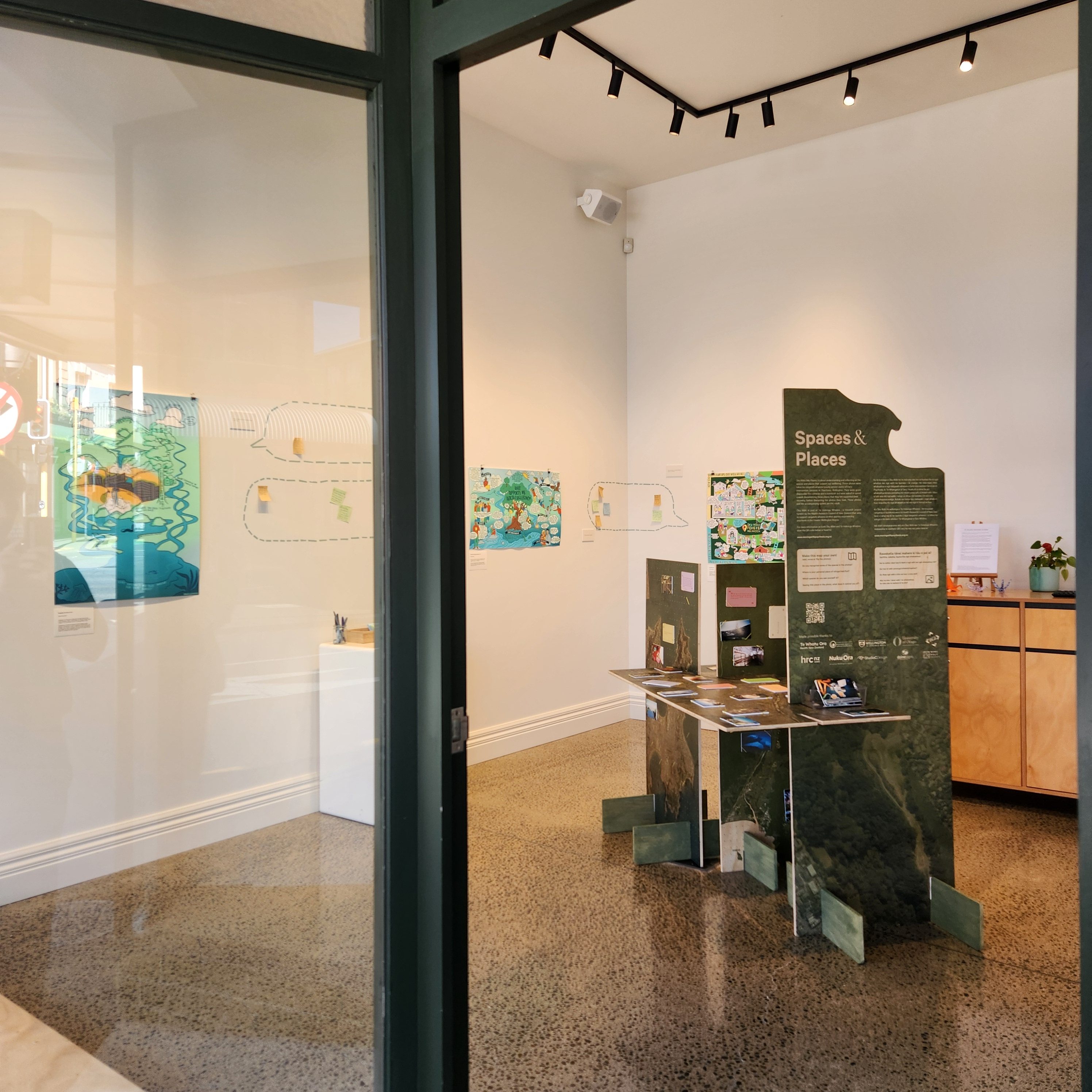
Over the past three months, Ōku Wāhi | My Places invited conversations about the role that spaces and places can play in supporting wellbeing. Through photography, illustration, video stories, and interactive elements, the exhibition shared the experiences of rangatahi whaiora (young people seeking wellness) navigating psychosis and explored the places that help people feel grounded, connected, and supported. Visitors were also invited to contribute their own reflections, allowing the exhibition to grow through the stories and experiences of the community.
Ōku Wāhi, meaning ‘My Places’, was co-produced with rangatahi whaiora as part of our 12-week wellbeing programme, Te Hekenga Whaiora. During the programme, participants used film cameras and notebooks to document the spaces and places that were important to their wellbeing.
Creating an interactive exhibition was intentional. We wanted to connect with people through a medium that was accessible, relational, and meaningful in places where communities already gather. For many rangatahi whaiora, social stigma remains an ongoing challenge. Making these stories visible through the exhibition created opportunities for people to encounter experiences of psychosis in a different way, helping to open conversations and challenge assumptions.
The exhibition was displayed across two community venues in Te Whanganui-a-tara: Te Whare Manaaki o Toda Gallery and Waitohi Johnsonville Library. While each space attracted people in different ways, both highlighted the important role that third spaces play in fostering connection, dialogue, and a sense of belonging.

Located just off bustling Cuba Street, Te Whare Manaaki o Toda Gallery is an extension of the Buddhist community centre. The gallery is grounded in values of peace, respect, and dialogue, making it a natural home for conversations about wellbeing and mental health. People enter the space with intention, often taking the opportunity to pause and spend time engaging with the stories.
In contrast, Waitohi Johnsonville Library offered a vibrant community hub where people encountered the exhibition as part of their everyday lives. As a space used by families, community groups, students, and local residents, the library provided a neutral and welcoming environment where visitors could engage with the exhibition. Whether people arrived intentionally or encountered the exhibition as part of their daily routine, these spaces helped foster meaningful engagement with the stories being shared.


One rangatahi whose story featured in the exhibition returned with several friends, proudly sharing their contribution and the stories held within the space. Moments like these show the significance of uplifting the stories of rangatahi whaiora, making them visible. It also shows how relationships create avenues for conversation about psychosis, for both rangatahi and wider community.
Across the two venues, people stopped to read, reflect, and share their thoughts. The interactive elements invited visitors to respond in tangible ways, using sticky notes and removable photographs that could be rearranged. Staff at Waitohi noted that an interactive exhibition of this kind was a unique addition to the library in the way it invited engagement from the community.

From these responses, common themes began to emerge. The natural world appeared frequently as a source of wellbeing, with people writing about the moana, parks, birdsong, and sunsets. Others reflected on the importance of family, friends, and community. Many responses revealed shared experiences, whether through similar places of comfort and connection or through experiences of living alongside mental health challenges.
One visitor captured this beautifully:
“It helps me to remember that I am a body. I don’t have to be good; I only have to be. And if we can all be together, that is good enough.”
This reflection speaks to a central message of Ōku Wāhi. The exhibition was never just about physical places. It was about belonging, connection, and the environments that allow people to be accepted as they are, because after all, identity is an integral element of wellbeing.
Alongside these reflections, we shared conversations with visitors and saw firsthand how stigma continues to persist socially. Some visitors expressed hesitation around the kupu (word) itself, highlighting how psychosis is often understood through stereotypes shaped by clinical classifications, institutional experiences, and harmful media narratives that many rangatahi whaiora must navigate. These interactions served as a reminder that barriers remain, and that creating opportunities for conversation and visibility play an important role in the destigmatisation of mental distress.

Ultimately, Ōku Wāhi is an invitation to pause, reflect, and exchange experiences without judgement; a medium for resonance, shaped by the stories of rangatahi whaiora navigating what it means to live well alongside psychosis. We discovered the quiet power community venues have for visibility; moving away from research formats where projects often go unseen by the general public. It demonstrated how neutral spaces and places bring people together, ease social expectations, and foster a sense of belonging to all the ways we can live well.